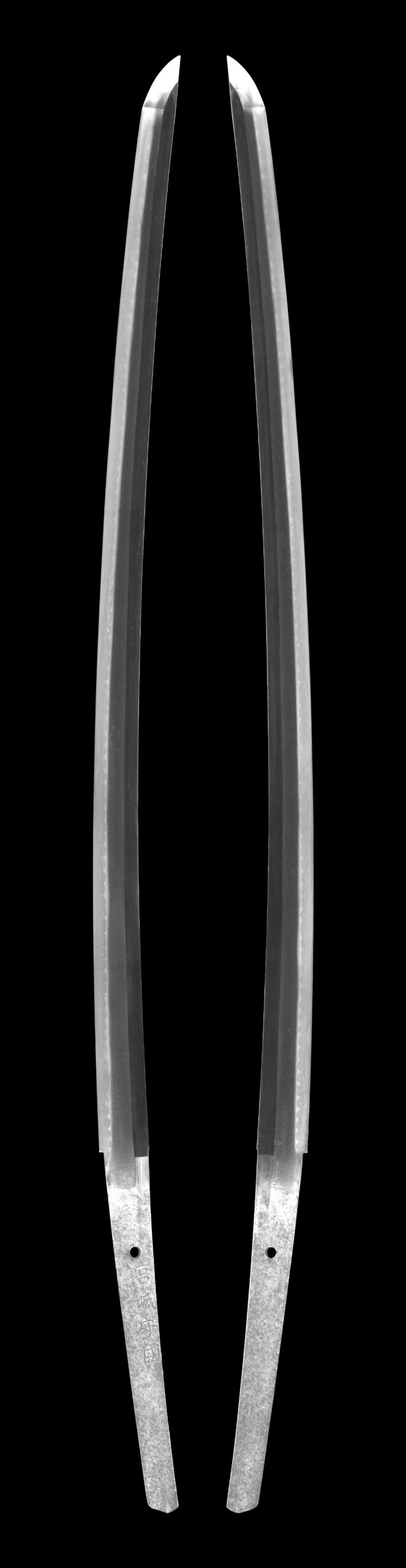
[Hozon Certificate]
Era: Late Edo Period
Seisōsai Muneari was a prominent pupil of the famous shin-shintō master Koyama Munetsugu. Born in Hachinohe (Mutsu Province), he first signed as Munekazu. During the Bunkyu era, he served as an official swordsmith for the Hachinohe domain (Nambu family, 20,000 koku). Known for superb cutting ability, some blades are found with test-cutting inscriptions.
Although this blade bears no signature, it has been authenticated as the work of Muneari. The hamon is a wavy notare-midare with soft, rich nie along the edge. The jihada is a very tight ko-itame, beautifully forged with fine texture. The blade retains a strong shape with little wear.
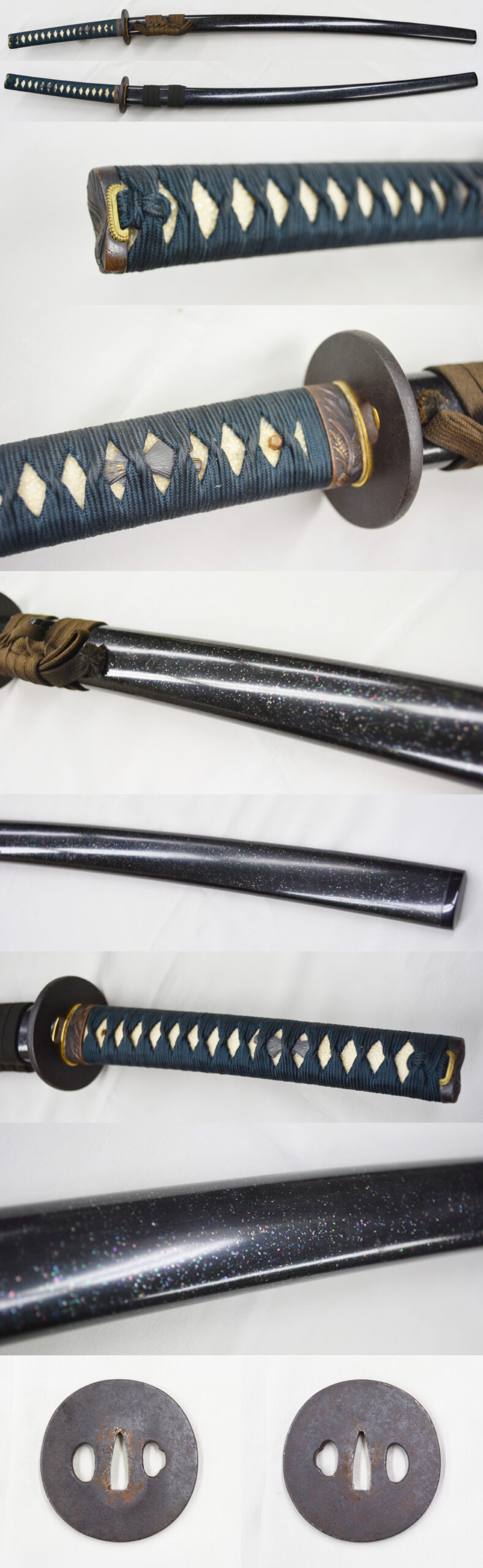
The koshirae is luxurious, featuring a tsuba with peony motifs, and fuchi-kashira and menuki depicting warriors from the Genpei War, showcasing refined craftsmanship.
Specifications
-
Mei: None (mumei)
-
Nagasa: 69.6 cm
-
Sori: 1.9 cm
-
Mekugi-ana: 1
-
Motohaba: 3.1 cm
-
Sakihaba: 2.1 cm
-
Motokasane: 0.8 cm
-
Sakikasane: 0.5 cm
-
Certificate: Nihon Token Hozon Kai – Hozon Certificate
-
Included:
-
Gold-finished single-piece habaki
-
Cha-kawari-nuri saya katana koshirae (brown lacquered finish)
-
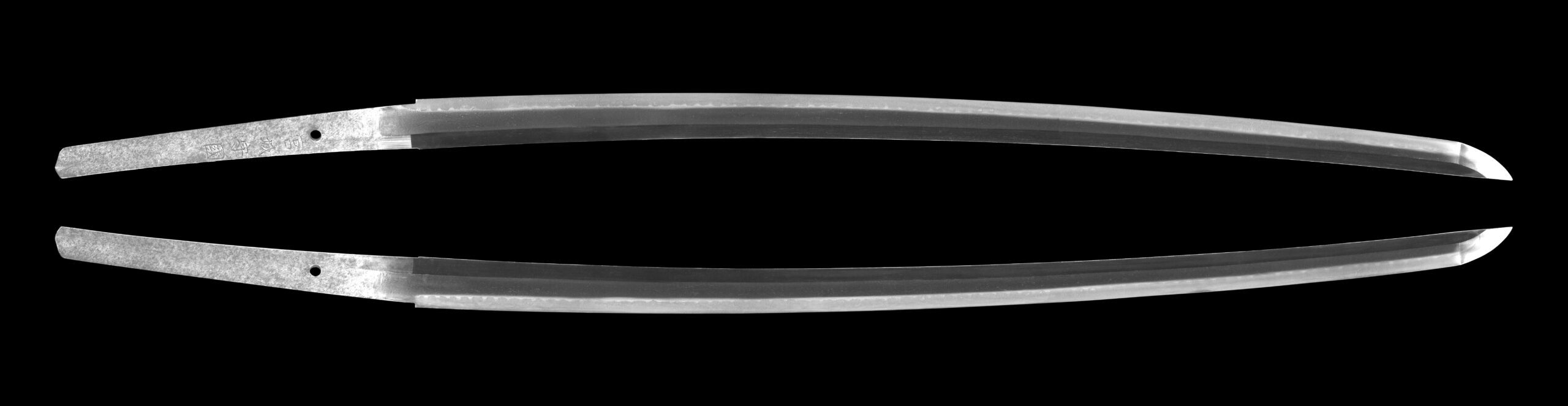
3. Miyagi Morikuni — Katana
Era: Early Shōwa Period
Miyagi Morikuni was born in 1889 in Miyagi Prefecture and served as an officially appointed swordsmith for the Japanese Army. A highly respected craftsman, he received the Chairman’s Award from the Army Swordsmith Technical Encouragement Association. He is the founder of a lineage of swordsmiths that continues with his son Miyagi Akimori and grandson Miyagi Norimasa.
This blade features a sugu-chō notare-midare hamon with small ashi and mixed ko-gunome. The jihada is a fine ko-itame with areas of mokume and visible chikei. The long kissaki and strong mihaba and kasane give it a powerful, energetic appearance. A well-preserved and dignified piece from a renowned prewar smith.
Specifications
-
Mei (omote): Miyagi Morikuni
-
Mei (ura): None
-
Nagasa: 65.0 cm
-
Sori: 1.4 cm
-
Mekugi-ana: 1
-
Motohaba: 3.2 cm
-
Sakihaba: 2.1 cm
-
Motokasane: 0.7 cm
-
Sakikasane: 0.5 cm
-
Certificate: None
-
Included:
-
Gold-covered single-piece habaki
-
Raden-chirashi kuro-ro-nuri saya katana koshirae (black lacquer with mother-of-pearl inlay)
-